Achieving Seamless Connectivity for Optimal Business Responsiveness
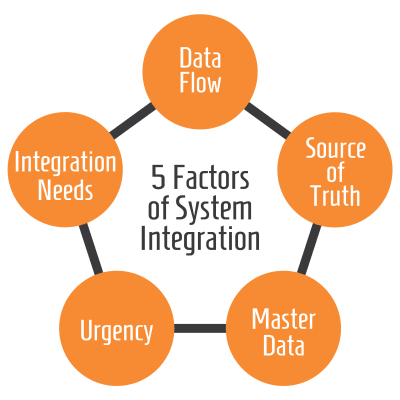
In the rapidly evolving landscape of technology, the focus has increasingly been on the integration of various component systems or sub-systems to deliver comprehensive functionality. Companies are recognizing the immense value that system integration can provide. By leveraging integrated systems, businesses can significantly increase employee productivity, ensure seamless data connectivity, and gain deeper insights into their processes. Our expertise lies in developing and implementing these integrated systems, ensuring smooth connectivity and enhancing operational efficiency.
Introduction
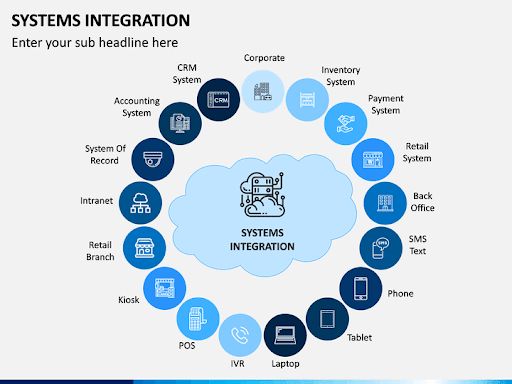
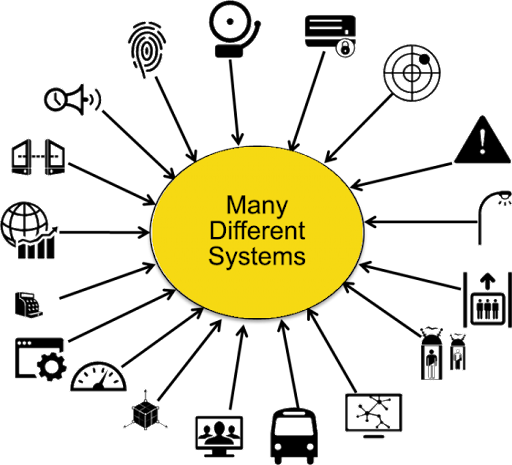
For over a decade, the primary goal of technology-driven industries has been to aggregate disparate systems into a unified framework. This approach not only streamlines operations but also drives growth and prosperity by reducing operational costs and enhancing productivity. System integration is the process of combining various software and hardware modules into a cohesive infrastructure, allowing all components to function as a single entity. This ensures that different systems, often from various vendors, work together seamlessly, providing significant business advantages.
Our Expertise
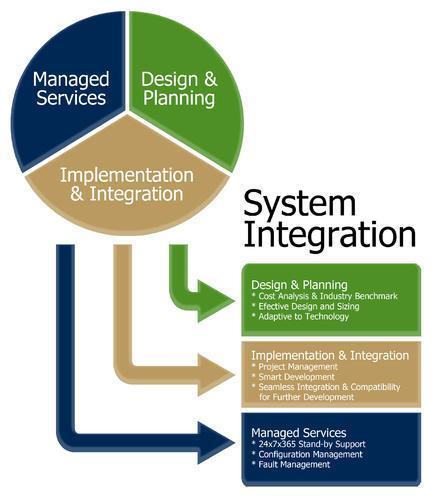
Our expertise in system integration involves creating tailored solutions that align perfectly with your business requirements. By focusing on seamless connectivity, we enhance the overall efficiency and productivity of your operations.
Comprehensive System Integration
System integration is the process of unifying various IT systems, enabling them to communicate and function as a single, cohesive unit. This process involves integrating both software and hardware components to create a seamless infrastructure.
How System Integration Works:
- Requirement Gathering: Begin with an assessment of the systems to be integrated and develop a feasible strategy. Understand what your business aims to achieve with integration and identify key tasks.
- Investigation: Analyze requirements to ensure they align with operational needs. Successful collaboration between your team and the systems integrator is essential to meet all requirements.
- Architecture Design: Develop a design plan that eliminates risks by visualizing how components will work together. Use blueprints or data flow diagrams to map out the process.
- Implementation Strategy: Based on the architecture design, develop the physical system. Address any bugs and ensure the system works as intended before going live.
- Implementation: Once tested and verified, deploy the integrated system. Provide training to employees to help them adapt to the new system.
- Support and Maintenance: Post-implementation support ensures the system continues to function flawlessly. Modify and update as needed to address any issues or add new features.
Types of System Integrations:
- Enterprise Application Integration (EAI): Integrates databases and workflows associated with business applications to ensure consistent information usage across the organization.
- Data Integration (DI): Combines data from various departments into a single schema, facilitating comprehensive data analysis.
- Electronic Document Integration (EDI): Automates business data exchanges between computers in standard formats, enhancing efficiency and reducing manual intervention.
Benefits of System Integration
Integrating systems offers numerous advantages that significantly enhance business operations.
Increased Productivity:
- Centralized Control: Integrate CRM with ERP systems to enable centralized control over daily processes. Employees can access all necessary applications and data from a single entry point, improving workflow efficiency.
Improved Data Accuracy and Reliability:
- Simultaneous Updates: Data is updated across all system components simultaneously, ensuring all departments have access to the most current information.
Faster Decision-Making:
- Holistic View: By consolidating data into a centralized system, businesses can perform analytics more efficiently and extract useful insights to make informed decisions quickly.
Cost-Effectiveness:
- Reduced Costs: System integration is often more cost-effective than replacing disjointed parts with a single system. It avoids the complexities and expenses associated with establishing a new IT infrastructure.
Methods of System Integration
There are several methods for achieving system integration, each suited to different business needs and technological environments.
Point-to-Point Integration:
- Connects one system directly to another. Best for simple integrations but becomes unmanageable with multiple systems.
Vertical Integration:
- Links sub-systems based on functional relationships, creating a silo-like structure. Suitable for limited integrations but can be rigid.
Star Integration:
- Connects multiple systems in a network, resembling a star shape. Offers greater functionality but can become complex and difficult to manage.
Horizontal Integration:
- Uses a single interface to connect all sub-systems, reducing the number of connections needed. Simplifies management and maintenance.
Use Cases for System Integration
System integration can be applied across various business functions to enhance efficiency and performance.
Legacy Systems Integration:
- Modernize outdated software by integrating it with newer systems, extending its functionality without a complete overhaul.
Enterprise Application Integration:
- Combine front- and back-office processes into a unified environment, improving data exchange and operational efficiency.
Third-Party Systems Integration:
- Expand existing system capabilities by integrating third-party tools, adding new features without extensive custom development.
Vision for the Future
Our vision for the future revolves around continuous innovation and integration with emerging technologies to drive business growth and efficiency.
Integration with AI and Machine Learning:
- Predictive Analytics: Utilize AI and machine learning to analyze data and predict trends, helping businesses make proactive decisions.
- Automation: Implement AI-driven automation to streamline operations and reduce manual workloads.
Hybrid and Multi-Cloud Strategies:
- Hybrid Cloud: Combine private and public cloud environments for better control and scalability.
- Multi-Cloud: Distribute workloads across multiple cloud providers to avoid vendor lock-in and optimize performance.
Advanced Security Measures:
- Zero Trust Architecture: Implement a zero-trust security model where every access request is thoroughly verified.
- Continuous Monitoring: Use advanced monitoring tools to detect and respond to security threats in real-time.
Delivering Value to Our Clients
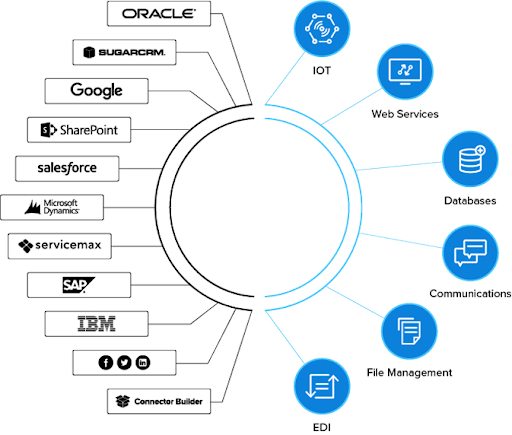
Our commitment to delivering value through seamless connectivity is reflected in our client-centric approach and dedication to excellence.
Tailored Solutions:
- Custom Integration: Develop bespoke integration solutions designed to meet your exact business needs.
- Personalized Service: Work closely with your team to understand your goals and challenges, ensuring our solutions deliver maximum value.
Proven Expertise and Innovation:
- Certified Professionals: Leverage the expertise of certified professionals proficient in the latest technologies and best practices.
- Continuous Improvement: Regularly update and enhance our solutions to incorporate the latest technological advancements.
Comprehensive Support:
- Implementation Support: Guide you through the entire implementation process, from planning to optimization.
- Training and Education: Provide comprehensive training to ensure your team is proficient in managing integrated systems.
- Ongoing Maintenance: Offer continuous support to ensure your systems remain secure and efficient.
Conclusion
We are dedicated to transforming your business with seamless connectivity solutions that enhance responsiveness and adaptability. Our approach ensures that we develop custom solutions perfectly aligned with your business needs, enabling you to stay competitive in a rapidly changing market. By partnering with us, you are investing in a future where your business can dynamically adapt to new challenges and opportunities, ensuring long-term success and growth. Join us in leveraging integrated systems to build a more responsive, efficient, and secure business environment.

Ready to Talk?
do you have a big idea we can help with?